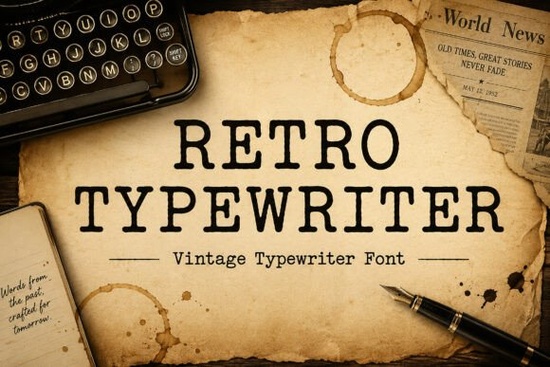
If you're looking for a serif font that feels like it came straight from a 1940s newsroom or a poet’s desk drawer, the Retro Typewriter Font is worth your attention. It’s not overly distressed or cartoonish instead, it balances clean structure with subtle imperfections: slight variations in stroke weight, gentle inconsistencies in letter spacing, and a soft, human rhythm that mimics real typewriter output. That makes it especially useful for designers and makers who want authenticity without gimmickry.
When does Retro Typewriter work best?
This font shines where personality and context matter more than neutrality. Think of projects where readers should feel something before they even read the words like a small-batch coffee brand leaning into its analog roots, or a self-published memoir with handwritten margins and vintage paper textures. It’s also a natural fit for print-on-demand creators making quote-based products: mugs with literary lines, pillow covers with typewritten affirmations, or journal covers meant to evoke quiet reflection.
Because it’s a serif font with strong editorial DNA, it pairs well with minimalist sans-serifs for contrast say, using Montage Font for headlines and Retro Typewriter for pull quotes. You’ll see this kind of pairing often in indie magazine layouts or boutique packaging where tone and texture are part of the message.
How does it compare to other vintage serif fonts?
Unlike heavily grungy or ultra-condensed typewriter styles, Retro Typewriter keeps readability front and center. Its x-height is generous, and lowercase letters have open counters so it works at smaller sizes (like on product tags or social media thumbnails) without losing character. Compare it to Desevon Font, which leans more formal and traditional, or Silkydusk Font, which has softer curves and a quieter mood. Retro Typewriter sits somewhere in between: warm but grounded, nostalgic but functional.
It includes standard OpenType features like ligatures and alternate characters useful if you’re designing book covers or long-form editorial pieces where subtle variation helps avoid visual fatigue. And because it’s designed for both digital and print use, you won’t need separate versions for web embeds versus PDF exports.
What kinds of projects actually use it well?
Here’s what real users report working smoothly:
- Newspaper-style layouts for historical reenactments, school projects, or local event flyers
- Book covers for mystery novels, memoirs, or poetry collections especially when paired with muted color palettes
- Journals and diaries sold on Etsy or at craft fairs, where tactile appeal matters as much as typography
- Branding for writer-focused businesses, like freelance editing services, writing retreats, or indie publishing houses
- Social graphics that highlight quotes think Instagram carousels or Pinterest pins where legibility and mood both count
You’ll also find it used quietly but effectively in packaging: tea tins with hand-set type vibes, candle labels with “hand-typed” scent descriptions, or greeting cards that avoid cliché script fonts in favor of something more grounded and sincere.
Things to keep in mind before downloading
Retro Typewriter isn’t built for dense body text in long documents it’s best reserved for headings, short blocks, or decorative elements. If you’re layering it over photos or textured backgrounds, test contrast first: its medium-weight serifs can fade on busy surfaces. Also, while it supports Latin-based languages, double-check glyph coverage if you’re working with accented characters outside English.
For small business owners and POD sellers, remember that font licensing matters. Creative Fabrica’s license allows commercial use including resale on physical items like t-shirts and mugs as long as you’re not redistributing the font file itself. Always review the license terms before launching a collection.
If you’ve already tried Retro Typewriter Font and want similar options, browsing Montage Font or Desevon Font gives you thoughtful alternatives with different moods but shared attention to detail and usability.
Before you add it to your next project:
- Test it at 16–24pt on light and dark backgrounds
- Try pairing it with one neutral sans-serif (like Inter or Lato) to balance its character
- Avoid overusing it let it anchor a design, not fill every line
- Check your final export: some apps render serif fonts differently in PDF vs. PNG
- Save a version with fallback text in case the font doesn’t load (e.g., for email templates)
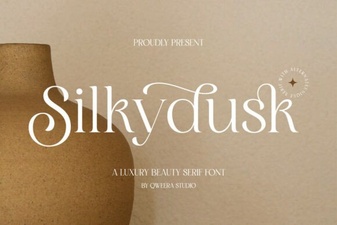 Silkydusk Font: Designing Elegant Typographic Projects
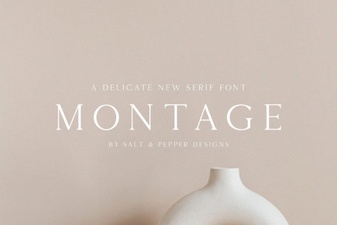 Montage Font: Modern Design for Bold Projects
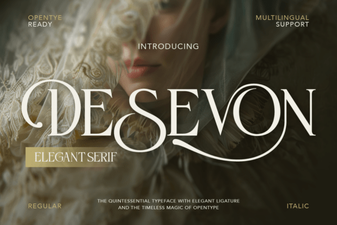 Desevon Font: Download & Creative Design Ideas
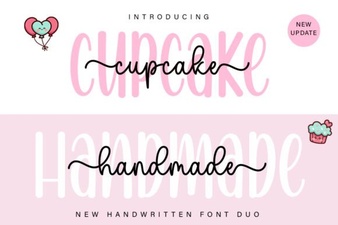 Cupcake Handmade Duo Font for Sweet Project Designs
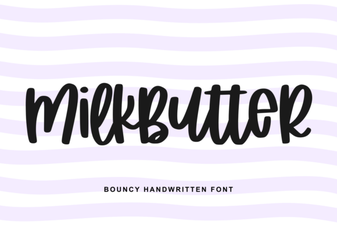 Milkbutter Font for Creative Typography Projects
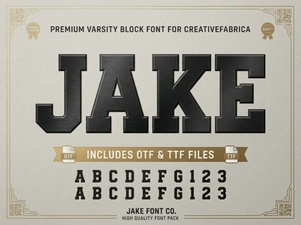 Download Jake Font for Creative Design Projects